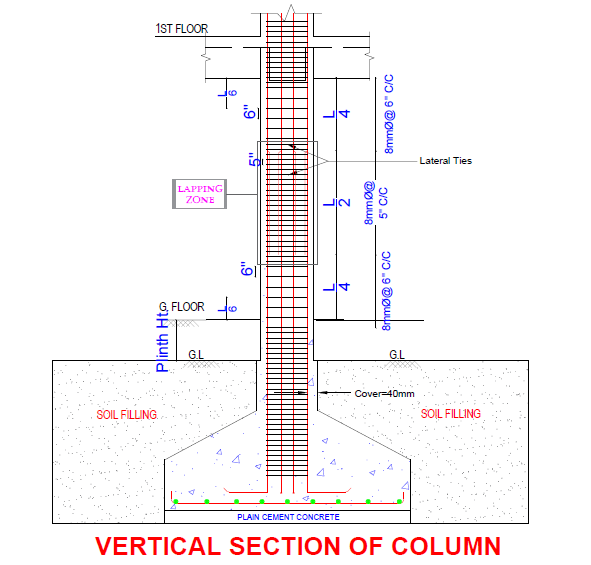
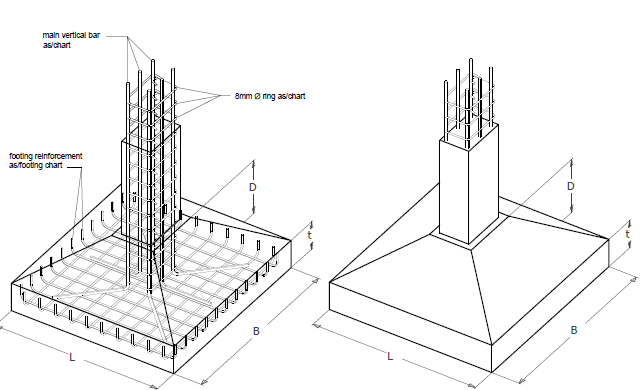
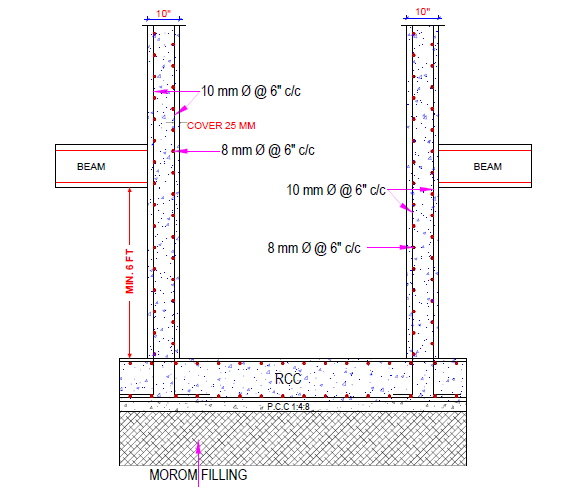
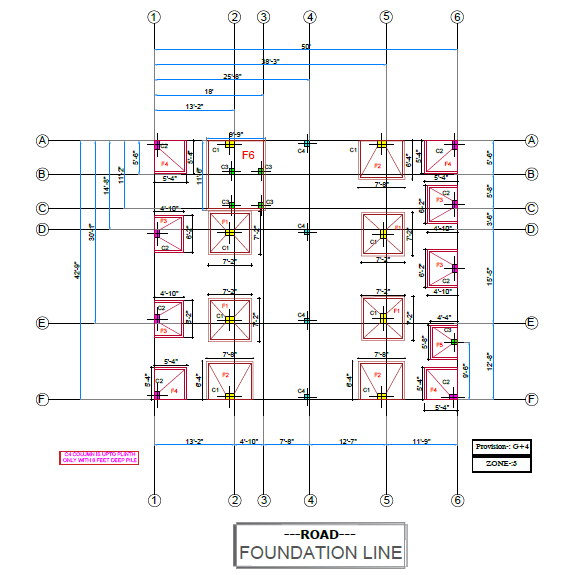
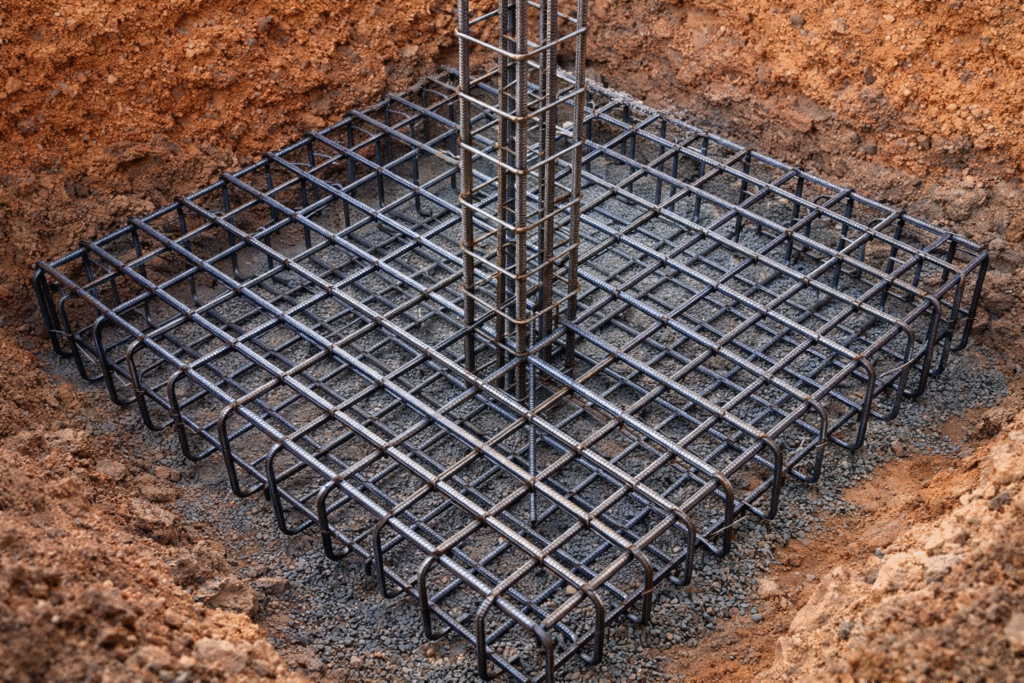
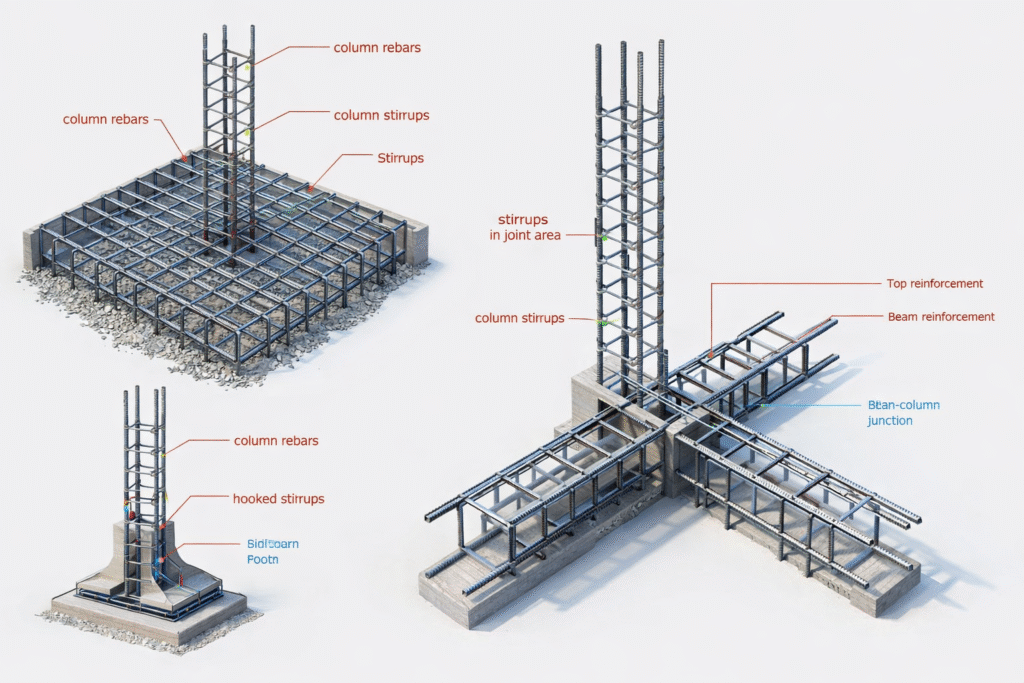
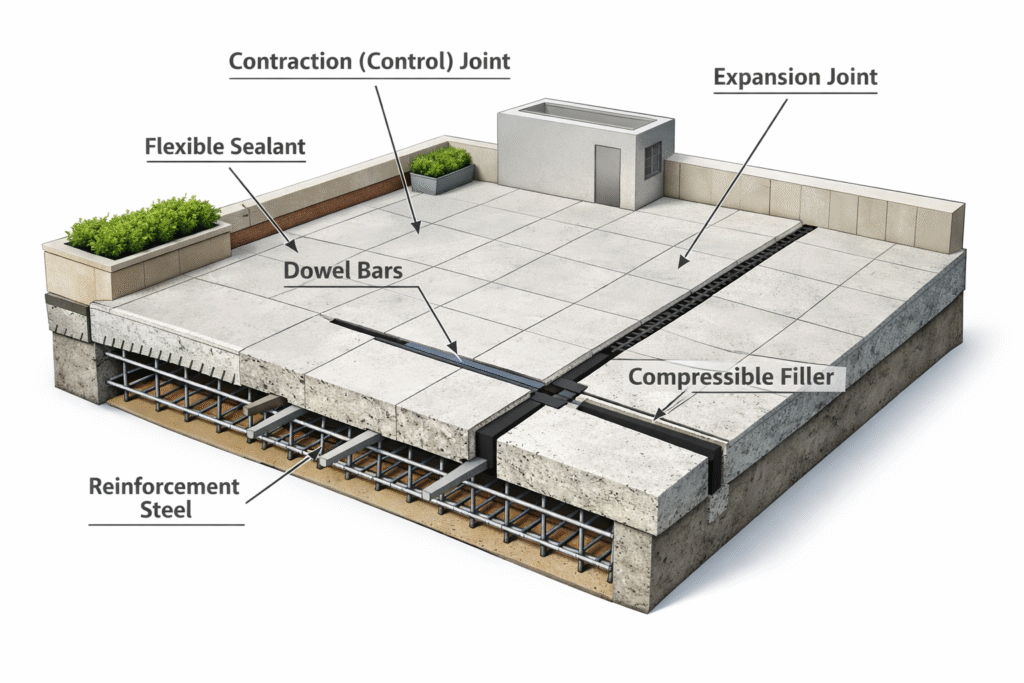
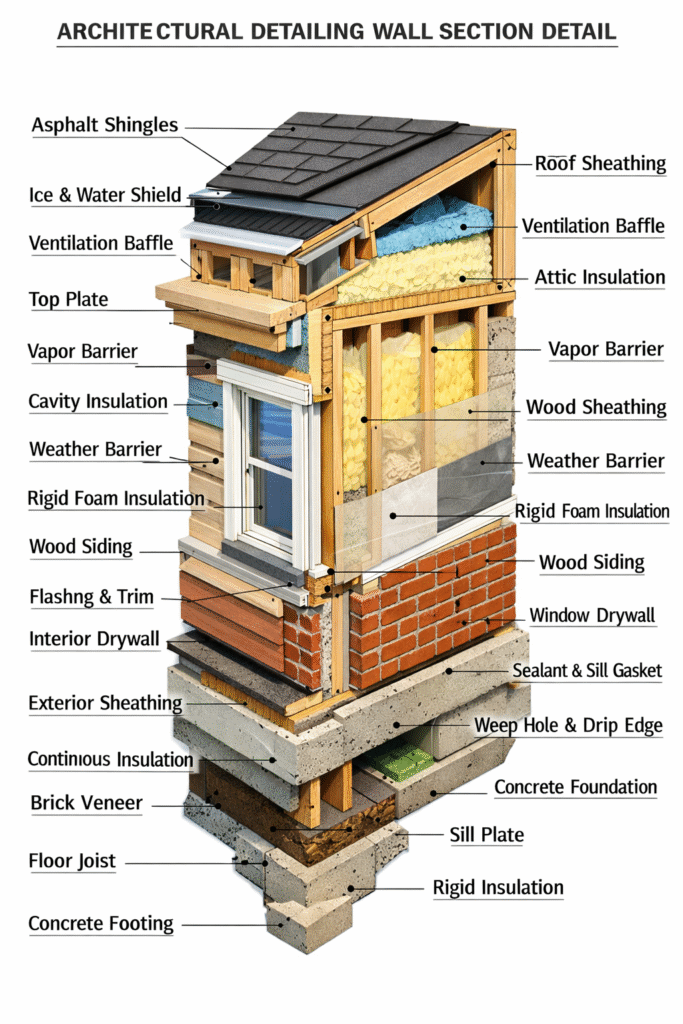
Design House Maker Pvt. Ltd. Structure Detailing 3D Building Detailing Drawings breaking a building down into clear, technical parts that can be constructed accurately. Based on the type of modern structure you shared Get Free Consultation Design House Maker Pvt. Ltd. Premium Architecture Design for Modern Living We create vastu-aligned, elegant, and functional living spaces designed for modern lifestyles. Get Free Consultation Core Structural Detailing Residential Building Structural Design RCC concrete grade used is M-20 for structural strengthReinforcement steel grade is Fe-500 or higherStructure is designed for G+4 floorsAll designs follow IS 456:2000 and IS 800:2007 standardsProper water-cement ratio must be maintained on siteMinimum clear cover is defined for footing, column, beam, and slabLap length of reinforcement bars should be 50DColumn sizes vary based on load (C1, C2, C3, C4 types)Footing types include isolated and combined footingsFoundation depth depends on soil conditionPCC layer (1:4:8) is provided below footingPlinth beam ensures structural stability at ground levelBeam sizes and reinforcement vary as per load requirementsSlab thickness is approximately 5 inchesOne-way and two-way slabs are used in designStaircase is RCC waist slab type with standard riser and treadLintel beams are provided above doors and windowsLift pit includes RCC shear wall with proper depthCuring time is essential for strength (7–14 days depending on work)Formwork removal timing must follow safety standards See More Details Foundation Detail Foundation Detail for Contraction Footing type (isolated, raft, pile)Reinforcement (rebar size, spacing)PCC (plain cement concrete) layerSoil level + compaction notesColumn starter barsKey Details:Vertical grooves or weakened planes are introduced.Spacing typically:Slabs on grade: 3–5 m apartFootings/walls: 6–12 m apart (depends on design)Depth of joint: about ¼ of slab thicknessFilled with flexible sealant if exposed BOOK FREE CONSULTATION Column & Beam Detailing RCC Structural Basics Longitudinal bars (main steel)Minimum: 4 bars (rectangular), 6 bars (circular)Diameter: usually 12 mm – 32 mmLateral ties (stirrups)Hold main bars in positionPrevent bucklingMinimum cover:40 mm (or as per design/exposure)Tie spacing:Generally 150–300 mmNear beam-column joints → reduce spacing (100 mm typical)Lap length:About 40–60 × bar diameterAvoid lapping all bars at same levelHook angle:Ties with 135° hooks for seismic safety Column & Beam Detailing Standard Layers (Top → Bottom) Finish layerTiles / china mosaic / stoneProtects waterproofingWaterproofing layerMembrane / chemical coating / brick bat cobaSlope screed (1:40 to 1:60)Ensures water drainageRCC slab (main structure)Thickness: 100–150 mm (typical)Ceiling plaster (bottom)Smooth internal finish Architectural wall section detail Architectural Foundation & BaseFooting (concrete base)Damp-proof course (DPC)Plinth beamGround level vs floor level2. Wall AssemblyStructural layer (brick, concrete, block, or frame)Insulation (thermal/acoustic)Vapor barrierInternal finish (plaster, drywall)External finish (cladding, paint, stone, etc.)3. Floor ConnectionFloor slab (RCC, timber, etc.)Floor finish (tiles, wood, etc.)Skirting detail4. Openings (if section cuts through window/door)Lintel (load-bearing support above opening)Frame fixing detailSill level and treatment5. Roof ConnectionRoof slab or trussWaterproofing layerParapet wall (if flat roof)Drainage slope and outletFrom outside → inside:Exterior cladding / paintCement plasterBrick/block wall (230mm typical in India)Insulation layer (optional)Internal plaster (12–15 mm)Paint finish Talk To Our Designer Full Name Phone Number Email Address City Your Requirement Book Online Consultation By Submitting this form, you agree to the Privacy Policy & Term & Conditions